Detection and Classification in One Model — The Trade-offs of KLA’s Unified CNN Patent
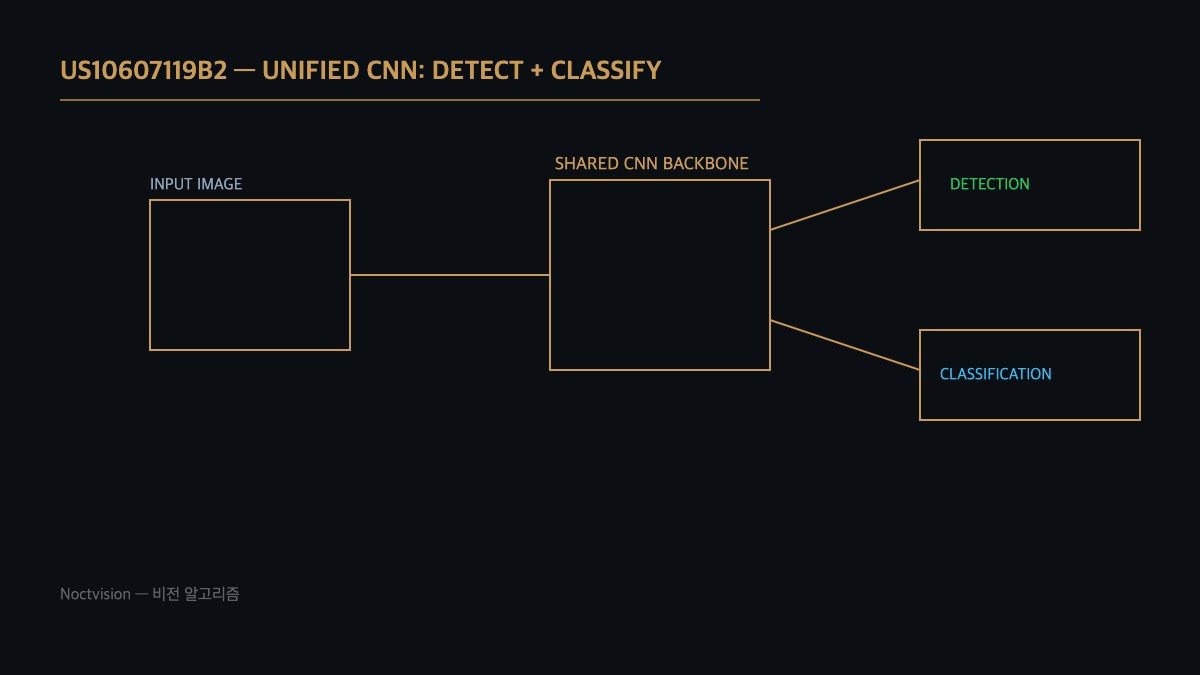
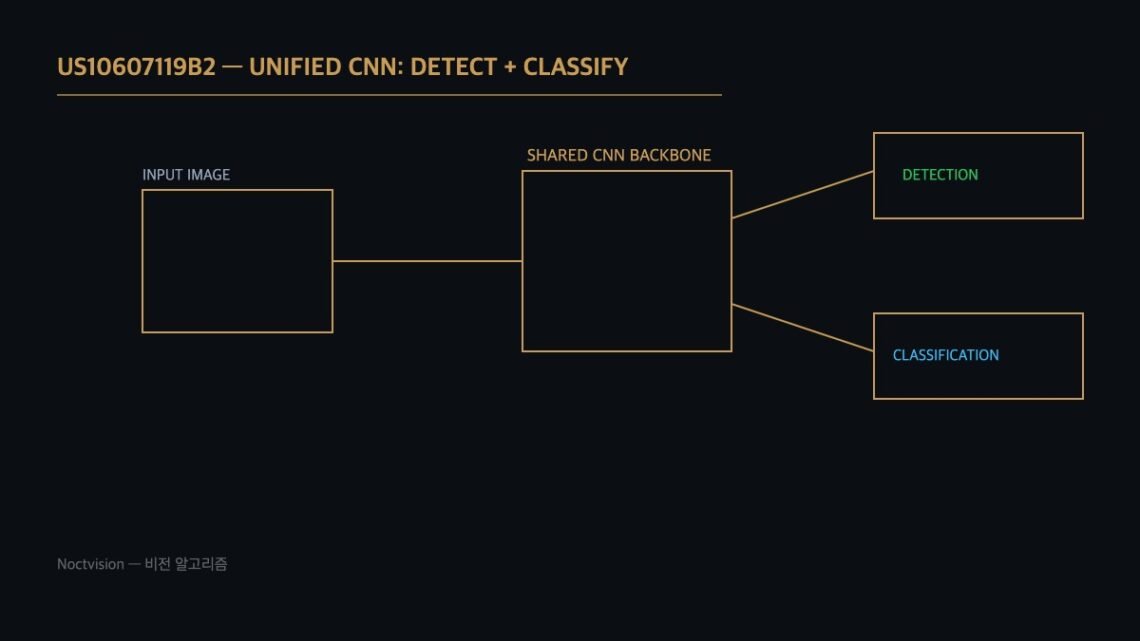
Running a defect-detection model separately from a defect-classification model creates information loss between the two stages. A common failure pattern is detection working fine while classification still gets the grade wrong. KLA’s granted patent US10607119B2 (“Unified neural network for defect detection and classification”) is an approach aimed at solving this with a single unified CNN.
The core idea is performing detection and classification simultaneously inside one neural network. Because the classification stage reuses the features extracted at the detection stage as-is, this can be advantageous in processing speed and consistency compared to running two separate pipelines. That said, a unified model carries a trade-off: detection and classification become harder to tune independently. Under conditions where retraining to raise one side’s performance risks disturbing the other side’s, a separated pipeline can actually be the more advantageous choice.
| Item | Detail |
|---|---|
| Patent number | US10607119B2 |
| Applicant | KLA Corp |
| Core technology | Simultaneous defect detection and classification via a single unified CNN |
Field Checkpoints
- Have detection accuracy and classification accuracy been measured separately, to confirm the unified model actually improves both?
- Has it been verified whether an expanded retraining scope, as defect types increase, also disturbs detection performance?
Source: Google Patents


You May Also Like
The Line-Scan Camera You Picked by Line Rate Alone — Why It Still Misses Defects: TDI and the Resolution Design Relationship
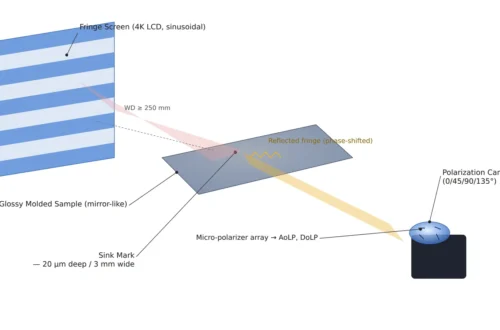
Catching 20 μm Sink Marks in High-Gloss Injection-Molded Parts with Phase Measuring Deflectometry (PMD) — The Last Gap Polarization Fusion Fills