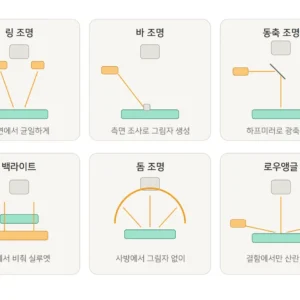
Lighting Design
Coaxial, dark-field, dome lighting setups — illumination geometry that keeps specular glare and shadow noise off the sensor.
-
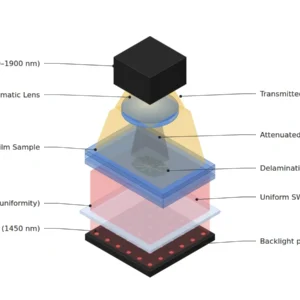
There Are Defects That Vanish in Visible Light — Inspection Design Beyond the 1 μm Barrier in SWIR Imaging
A defect with no contrast in visible light must be seen by changing the wavelength. This article maps how SWIR imaging works, how Cu-Cu bonded sensors opened up pixel pitch, and how lighting…
-
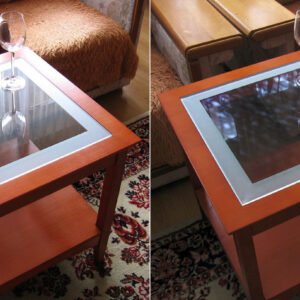
Specular Reflection Erases Defects: How Cross-Polarization Catches Missed Detections on Highly Reflective Surfaces
When a plated connector and a matte housing share a FOV, specular reflection saturates the highlight and buries defects. Here is how cross-polarization filtering physically blocks specular reflection, and when it is favorable…
-
Software-Defined Lighting: One Head, Switching Between Dark-Field and Coaxial Illumination
When a single target mixes matte and high-gloss regions, a fixed lighting setup forces a compromise. Here is how a multi-channel Software-Defined Lighting head, backed by GigE Vision 3.0 and edge inference, switches…
-
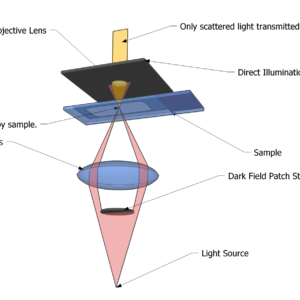
Dark-Field Illumination and Edge AI Defect Classification: A New Baseline for Specular-Surface Inspection
The smoother a surface looks, the harder it can be to inspect: specular reflection either saturates the sensor or buries shallow defects in near-zero contrast. Here is how dark-field illumination and unsupervised edge…
-
Automotive Part Appearance Inspection: Lighting Design Comes First
Automotive parts mix painted, chrome-plated, and molded surfaces with very different reflectivity on one line. Why lighting design matched to each material has to be settled before the AI algorithm can do its…
-
Keeping Frame Rate and Lighting from Colliding on a High-Speed Inspection Line
Push frame rate up and exposure time shrinks, taking light and contrast with it. How frame rate, illuminance, bandwidth, and strobe-trigger timing all have to be designed as one system to keep micro-defects…
-
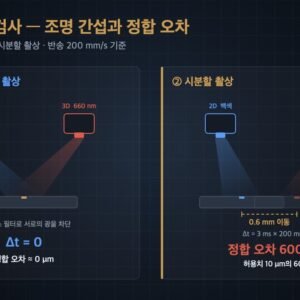
2D/3D Fusion Inspection: The Bottleneck Is Lighting Interference
When a 2D camera and 3D profiler share the same wavelength band, no camera spec fixes it. Wavelength separation, not time-division capture, is usually the answer — and here is the math on…
-
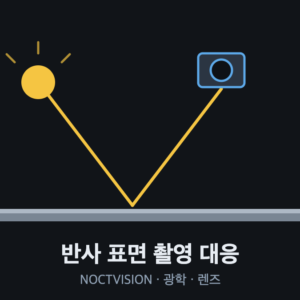
How to Handle Imaging on Highly Reflective Surfaces
Five practical ways to handle blown-out highlights on specular surfaces -- angle changes, coaxial and dome lighting, polarization, and multi-shot compositing -- with the trade-offs of each.
-
Six Machine-Vision Lighting Methods and How to Choose
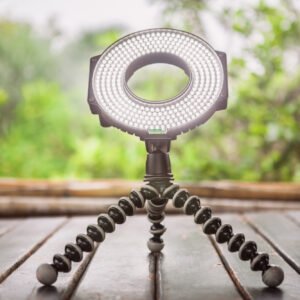
Six industrial machine-vision lighting methods -- ring, bar, coaxial, back, dome, and low-angle -- with clear criteria for which fits which inspection target and surface.