Edge AI
This section covers what goes wrong when an inspection model runs on a small board next to the machine instead of a server: accuracy lost to quantization, latency added by heat, and throughput set by the camera interface. These are items to confirm with numbers on site.
Start with these
- Four Snags in Initial Jetson Orin Nano Setup — a check order for first power-on
- It Worked on the Server, So Why Does Accuracy Drop on the Edge? — the order for finding accuracy loss
- Is It Safe When the Average Latency Fits? — splitting the latency budget by p99
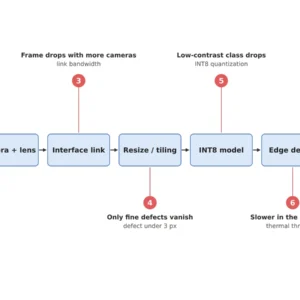
- Why Edge AI Vision Fails on the Factory Floor — a troubleshooting map from symptom to cause
Unfamiliar terms are explained in the Glossary, and a reading order across topics is in the Start Here guide.
-
Why Edge AI Vision Fails on the Factory Floor
Shrink a 20 MP image to a 640 px input and a 60 μm scratch becomes 0.35 pixel. Before retraining a wobbling edge AI inspection, I worked out the one number to measure…
-
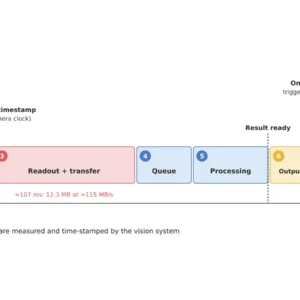
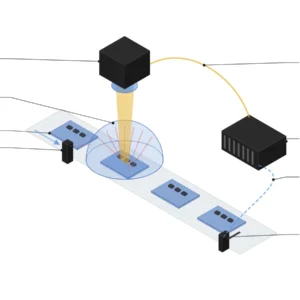
The Vision Decision Is Done, So Why Does the PLC Learn It Late?
Even with inference done in 25 ms, a 4,096 × 3,000 px image takes 106.9 ms just to cross 1GigE. With a 60 ms processing p99, over 1% of results land after the…
-
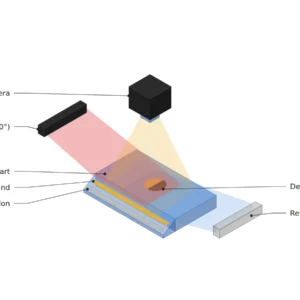
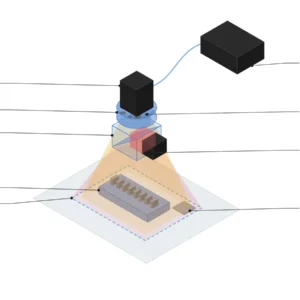
Brightness Augmentation Cannot Move Shadows or Highlights
Brightness, gamma and noise augmentation change pixel values only and cannot move shadows or highlights. When the elevation drops from 45° to 30°, the highlight on a 1 mm radius chamfer shifts about…
-
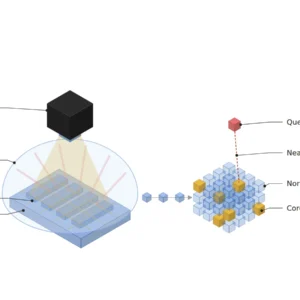
Does Memory-Bank Anomaly Detection Need to Remember Every Normal Patch?
Storing every normal patch takes 6.29 GB and a 1 % coreset 62.9 MB, yet search still costs 2.58 trillion multiply-accumulates per image. Search time caps the coreset ratio, and overdetection on normal…
-
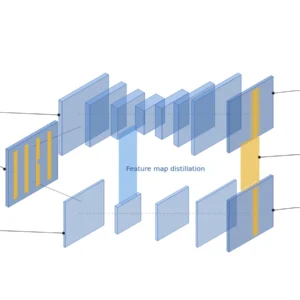
Why Does a Lightweight Model Lose the Finest Defects First?
A 30 μm trace nick, 3 px at 10 μm/px, drops to 0.75 of a cell at student output stride 4 and can vanish whatever the distillation temperature. Stride 2, T = 2…
-
In Edge Inspection, Input Drift Shows Up Before Accuracy Drops
Lens contamination and light degradation show up in reference luminance and sharpness before accuracy drops. A per-frame p99 alarm fires once every 100 frames, so thresholds go on λ = 0.05 EWMA values…
-
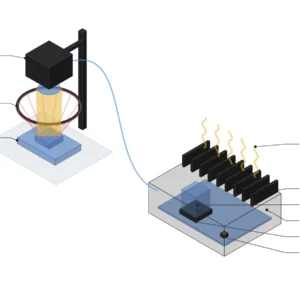
Why Does a Fanless Edge Device Slow Down by Afternoon?
A fanless module drawing 15 W at 40 °C ambient climbs to 77.5 °C with a 25-minute time constant, yet a 5-minute benchmark sees 18 % of the rise. A fixed 85 %…
-
Why an Average Latency Inside the Deadline Is Not Safe
An average of 33.6 ms is just over half of a 60 ms deadline, but per-stage p99 values add up to 53.1 ms, leaving 6.9 ms. Transfer and inference each add 6 ms…
-
Where Do Fine Defects Go When You Shrink to 640 × 640?
Shrink a 20 MP PCB image to 640 px and a 90 μm defect is left at 0.35 px. Seventy tiles with a 64 px overlap take 560 ms, past a 400 ms…
-
When Light Runs Short, a SPAD Sensor Counts Photons Instead of Extending Exposure
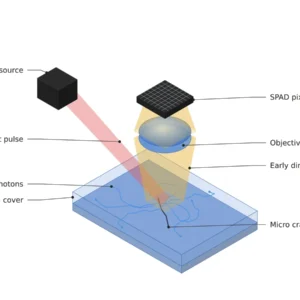
Split 100 photons over 30 frames and a standard CMOS sensor's signal-to-noise ratio falls from 7.5 to 4.5, while a SPAD adds them without read noise. But 256 pixels see only 4.27 mm,…