Vision Algorithm
This section covers the rules and models that pick defects out of an image, and the cost when a decision is wrong: how rule-based and deep-learning methods share the work, anomaly detection, and filter order. It is the stage that turns the image made by lighting and optics into a pass/fail decision.
Start with these
- Deep Learning vs. Rule-Based Algorithms, When to Use Which — the conditions that favor each
- Overdetection or Missed Detection, Which One Costs More? — setting the decision line by cost
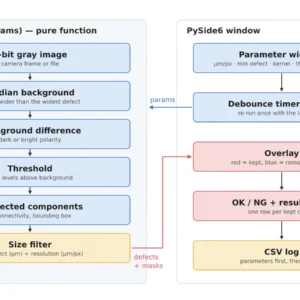
- Building a Vision Inspection App with PySide6 and OpenCV — full code for a minimal UI that tunes parameters on screen
- Must Every Normal Patch Be Remembered? — coreset design for memory-bank anomaly detection
Unfamiliar terms are explained in the Glossary, and a reading order across topics is in the Start Here guide.
-
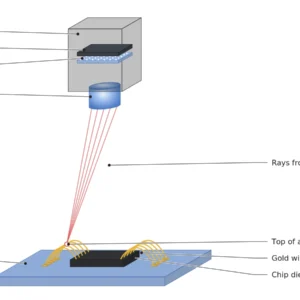
A Light Field Camera Trades Pixels for Depth
A light field camera bundles the pixels behind each microlens into one point. At 2x on a 25 μm gold wire, no bundle size keeps both the wire and the loop.
-
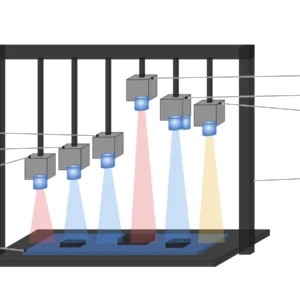
Vision Types Split First by Wavelength and Pixel Size
On the same 100 mm PCB, only area and line scan give a 50 μm defect two pixels or more. LWIR blurs it at 48.8 μm, and 3D heights split into 4.9 μm…
-
When the Light Dims by 5 %, How Many Good Pixels Turn Into Defects?
With the decision line fixed, a 5 % drop in lamp output turns 19 % of good pixels into defects. This traces how anomaly detection scores slip under lighting change and what a…
-
Why Do Shiny Parts Look Cold to a Thermal Camera?
A 70 °C aluminum capacitor reads 30.6 °C on a thermal camera and a 90 °C chip reads 75 °C. One reflects the room; the other shares a pixel with the board.
-
Building a Vision Inspection App with PySide6 and OpenCV
In a 220-line PySide6 and OpenCV inspection UI, a 3 px size filter and a 25-level threshold set the detection floor together. Without bytesPerLine a 1,021 px wide image turns a 265 px…
-
Why Edge AI Vision Fails on the Factory Floor
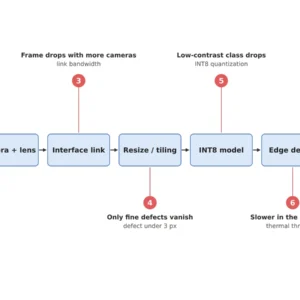
Shrink a 20 MP image to a 640 px input and a 60 μm scratch becomes 0.35 pixel. Before retraining a wobbling edge AI inspection, I worked out the one number to measure…
-
The Vision Decision Is Done, So Why Does the PLC Learn It Late?
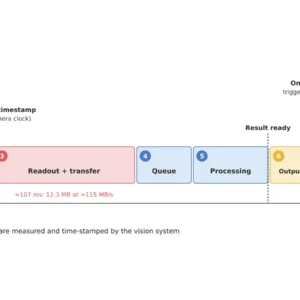
Even with inference done in 25 ms, a 4,096 × 3,000 px image takes 106.9 ms just to cross 1GigE. With a 60 ms processing p99, over 1% of results land after the…
-
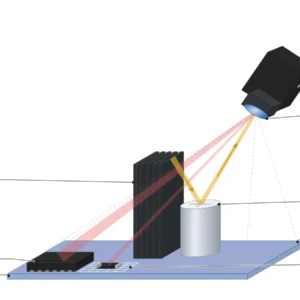
On Moving Parts, Photometric Stereo Shrinks the Standstill Condition to 0.5 ms
On a moving part, photometric stereo moves its standstill condition into the gap between two exposures. At 50 μm/px and 100 mm per second the gap is 0.5 ms, and directions split by…
-
Flat-Field Correction Gain Amplifies Noise Along with Uneven Light
Flat-field correction restores only the average brightness of the corners. A 1.67 gain on a corner getting 60 % of the light raises noise 1.29 times and the chance of crossing the same…
-
Brightness Augmentation Cannot Move Shadows or Highlights
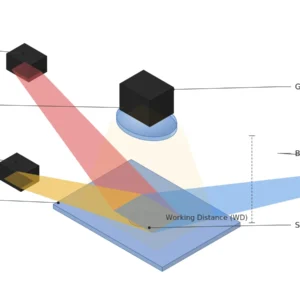
Brightness, gamma and noise augmentation change pixel values only and cannot move shadows or highlights. When the elevation drops from 45° to 30°, the highlight on a 1 mm radius chamfer shifts about…