Vision Algorithm
Image filtering, feature extraction, and defect classification logic — the algorithm layer that turns pixels into pass/fail decisions.
-
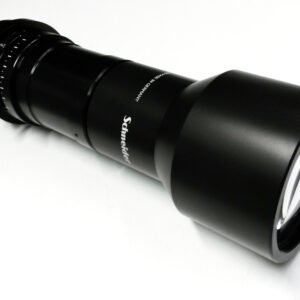
The Tug-of-War Between Distortion Correction and Depth of Field: How Telecentric Lenses Catch Micro-Defects Without Losing Them
Raise lens magnification to resolve a micro-defect and depth of field narrows; layer distortion on top and dimensional measurements start to drift. A look at how magnification, DOF, distortion, and reflectivity interact in…
-
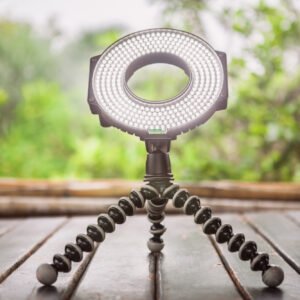
Software-Defined Lighting: One Head, Switching Between Dark-Field and Coaxial Illumination
When a single target mixes matte and high-gloss regions, a fixed lighting setup forces a compromise. Here is how a multi-channel Software-Defined Lighting head, backed by GigE Vision 3.0 and edge inference, switches…
-
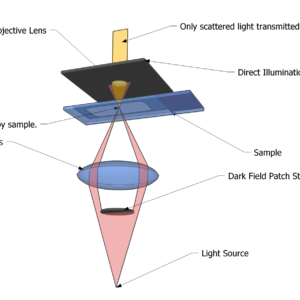
Dark-Field Illumination and Edge AI Defect Classification: A New Baseline for Specular-Surface Inspection
The smoother a surface looks, the harder it can be to inspect: specular reflection either saturates the sensor or buries shallow defects in near-zero contrast. Here is how dark-field illumination and unsupervised edge…
-
What Optical Design Needs to Not Miss Defects on a High-Speed Line
At dozens of parts per second, motion blur erases contrast before a slow shutter can catch a defect. Strobe illumination, trigger synchronization, and a WD-aware lens spec are what actually hold up under…
-
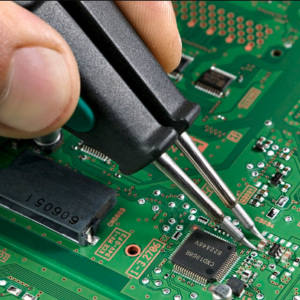
PCB and Semiconductor Surface Inspection: The 15–40µm Boundary the Human Eye Misses
Rising demand for machine vision is, at bottom, a sign that quality standards for defects the human eye can no longer catch are accelerating. How FOV, resolution, lighting, and WD all define each…
-
Edge AI Inference Latency: The Camera Interface Decides Before the NPU Does — GigE Vision 3.0 RDMA and Disaggregated Inspection Architecture
A new NPU didn’t fix your throughput problem? Trace the bottleneck and it’s often the camera-to-host interface, not compute — and GigE Vision 3.0 RDMA (GVRSP) is the fix.
-
The Line-Scan Camera You Picked by Line Rate Alone — Why It Still Misses Defects: TDI and the Resolution Design Relationship
Raising line rate alone can make small defects leak through more, not less. The real design variable is down-web pixel density and lens MTF, not the kHz number on the spec sheet.
-
Parts at Every Height, One Focus Plane — Can It All Stay Sharp? Liquid-Lens EDOF and the Division of Labor with Interface Bandwidth
Pin insertion depths vary 0.3-0.5mm within the same connector housing. A single fixed-focus lens can’t keep every pin sharp — here’s how liquid-lens EDOF, fusion, and interface bandwidth have to be designed as…
-
Highly Reflective Surface Defects: One Filtering Order Decides the Outcome — Bilateral Filters and the Division of Labor with Onboard AI Cameras
The wrong filter can erase a defect boundary along with the noise, or turn a specular highlight into a false detection. Matching filter type to defect type — and reflectivity — decides the…
-
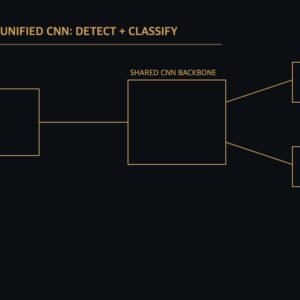
Detection and Classification in One Model — The Trade-offs of KLA’s Unified CNN Patent
A look at KLA's unified-CNN patent (US10607119B2) for simultaneous defect detection and classification, and the tuning trade-off it creates versus separated pipelines.