-
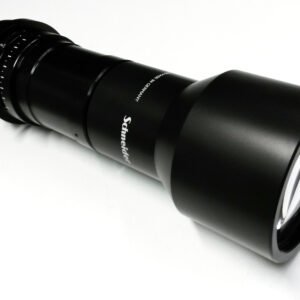
When Height Varies, F7.1 Beats F16 on a Telecentric Lens
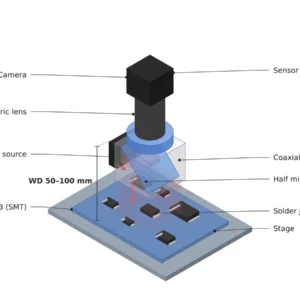
With part height wobbling ±0.15 mm, a 20 μm defect peaks at 70 % MTF at an object-side NA of 0.042; closing to F16 for depth drops even in-focus contrast to 54 %.…
-
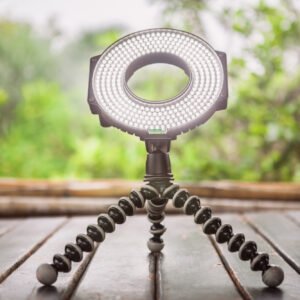
The Cost of Switching Between Dark-Field and Coaxial with Software-Defined Lighting
Under coaxial light, nickel-plated terminals and matte molding differ 398 to 1 in brightness, too wide for one exposure. Switching dark field, coaxial and dome in turn from one head adds 16.7 ms…
-
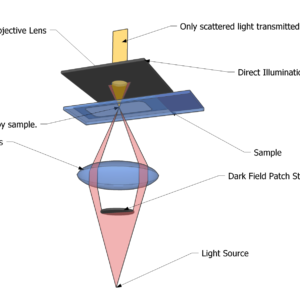
A Dark-Field Ring Light Tolerates Far More Tilt Than Coaxial Light
On a glossy molded housing under coaxial light, the background goes dark past a 0.86° tilt. A 15° dark-field ring widens that to 36.6°, and a ring radius near five times the field…
-
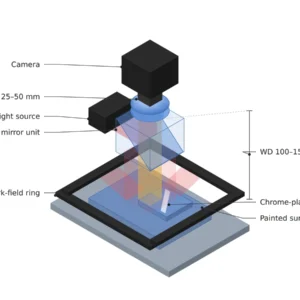
In Automotive Part Appearance Inspection, Lighting Design Comes First
Under a point source chrome plating and black paint sit 76,800 times apart, beyond 12 bits, but under a dome the ratio falls to 12. Paint scratches go to 15° low-angle light and…
-
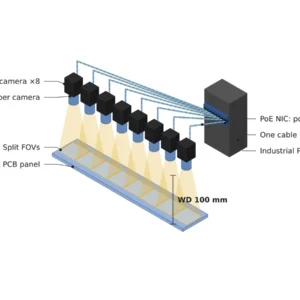
Why the PoE Network Card Sets the Limit on Your Optical Setup in a Multi-Camera Inspection Line
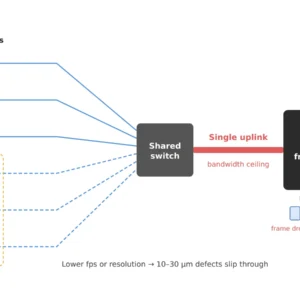
Putting 30 μm defects into three pixels takes four cameras on each side of the PCB, eight in all. At 100 MB/s each, a single switch with one 1 GigE link to the…
-
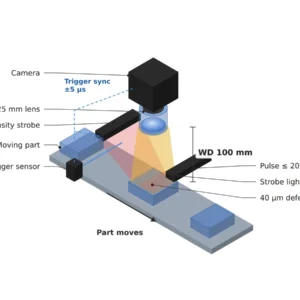
What Optical Design Needs to Not Miss Defects on a High-Speed Line
A 40 μm scratch on a part passing at 1 m/s stays within one pixel of smear only if the light stops within 13.3 μs, and the 7.5-fold light shortfall splits into 2…
-
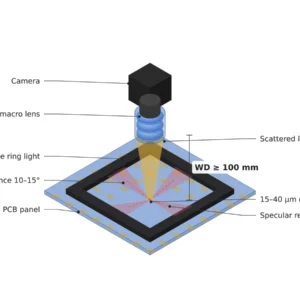
The 15 to 40 µm Boundary the Human Eye Misses in PCB and Semiconductor Surface Inspection
20/20 vision separates 72.7 μm at 250 mm. Catching 15 to 40 μm defects by machine takes 8 μm per pixel and a narrow aperture window of f/4 to f/5.6, and the lower…
-
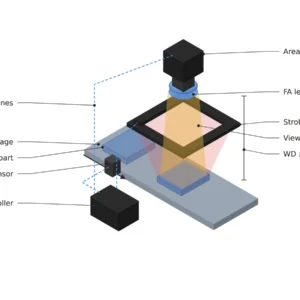
Keeping Frame Rate and Lighting from Colliding on a High-Speed Inspection Line
Tighten the defect limit from 60 μm to 15 μm on a 1.1 m/s line and frames go from 29.8 to 119.4 fps, the strobe width limit falls to 4.55 μs, the light…
-
When You Add Cameras to a Semiconductor or PCB Line, the Interface Rewrites the Optics
A 5,120 px camera that puts a 10 μm defect into three pixels makes 26.2 MB frames, so 1 GigE tops out at 4.8 frames per second, and 2.5 μm pixels narrow the…
-
In the Age of Deep-Learning Inspection, What to Check Before Camera Spec
Holding a 30 μm crack in three pixels sets 10 μm/px, a 0.345× telecentric lens and a 1.25 mm depth of field at f/8 before any camera is chosen. Shrinking a 4,096 px…